

5.21.2026
Black Bottom House of Prayer: Historic Restoration by Interstruct
Susan Moynihan
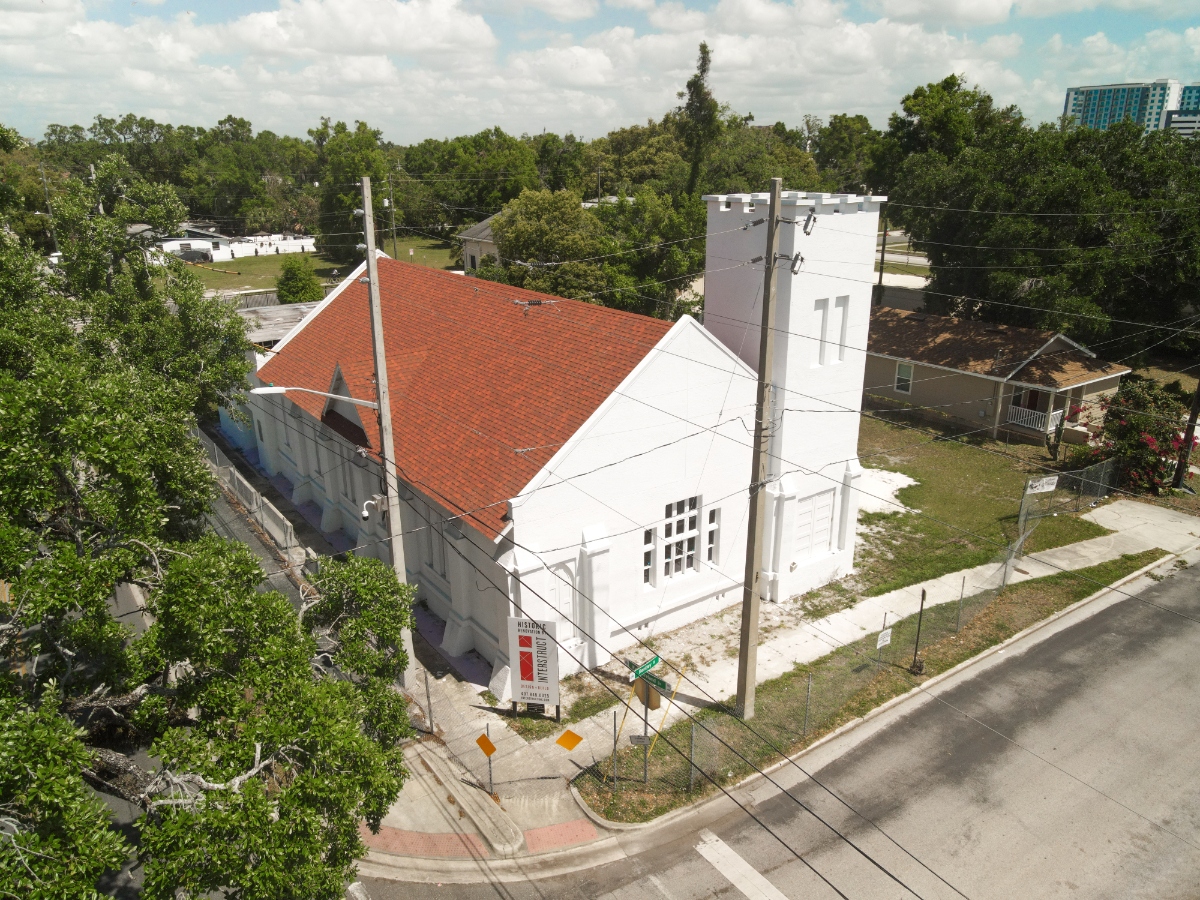
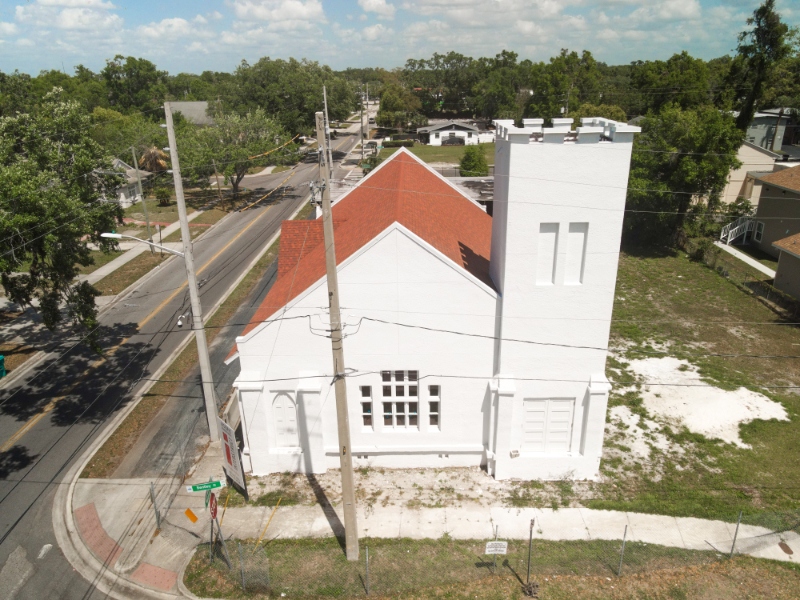
Interstruct’s commitment to its Parramore neighborhood led to the historic restoration of Black Bottom House of Prayer, a century-old church with extensive damage from storms and decades of neglect. Interstruct provided no-fee services and historically accurate construction for the restoration project. The result is a new era for one of Florida’s oldest Black churches.
Below is an extract of the full story of the history and restoration of Black Bottom House of Prayer, as it appeared in Reflections Magazine, and can be read at the Orange County Regional History Center’s website.
A Changing Community
Constructed in 1925 as Pleasant Hill Colored Methodist Episcopal Congregation (later renamed Carter’s Tabernacle CME), the church was a centerpiece in the then-thriving Black community in downtown Orlando. But headwinds were brewing as city developers began to enforce segregation by using zoning laws to designate residential areas for Black residents, in places with less-desirable geography and poorer infrastructure. In 1962, construction of I-4 cut off part of Division Street, effectively severing West Parramore from the city center just a mile to the east. Middle-class Black families began to depart for areas with more to offer, including the original founding parish, as the Parramore neighborhood fell into economic decline.
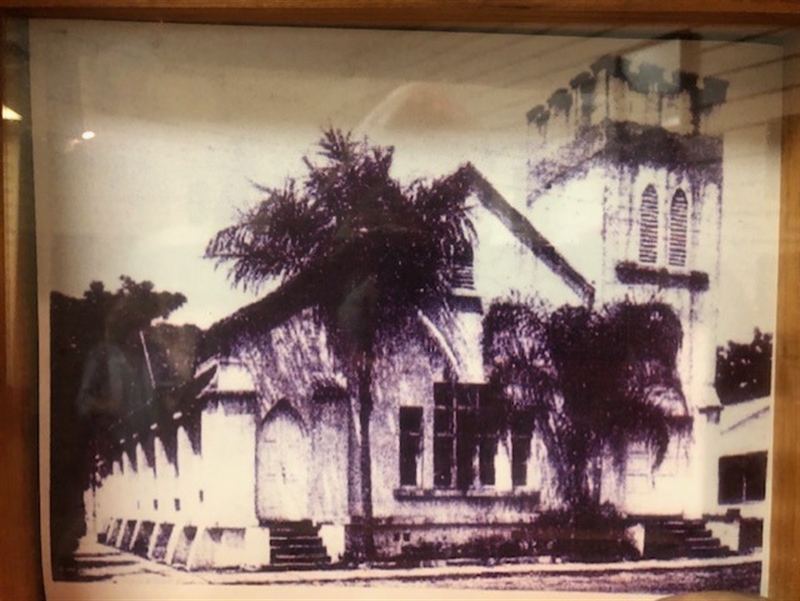
A later congregation renamed the building Black Bottom House of Prayer, paying tribute to the neighborhood’s original nickname of Black Bottom (named after the muddy streets from constant flooding from low elevation). But eventually they moved too, and the church sat vacant for decades, a decaying casualty in an overlooked neighborhood.
A Second Chance for Black Bottom House of Prayer
Community advocate Pastor Dana Jackson bought the abandoned property in 2015, with aims of restoring it as a house of prayer and community resource offering fellowship and social services.
The first step was to get the church designated as a historic landmark, which she did in conjunction with the Byrd Law Group and Orange Preservation Trust. She moved her nonprofit, the National ADHD Foundation, into a newer community room and began to grow her congregation as she worked to secure funds for restoration.
But in October 2019, Hurricane Ida roared through town, its force leading to a total collapse of the roof and support walls. The estimate to save the building ballooned to $1 million, and most people advised her to have it torn down.
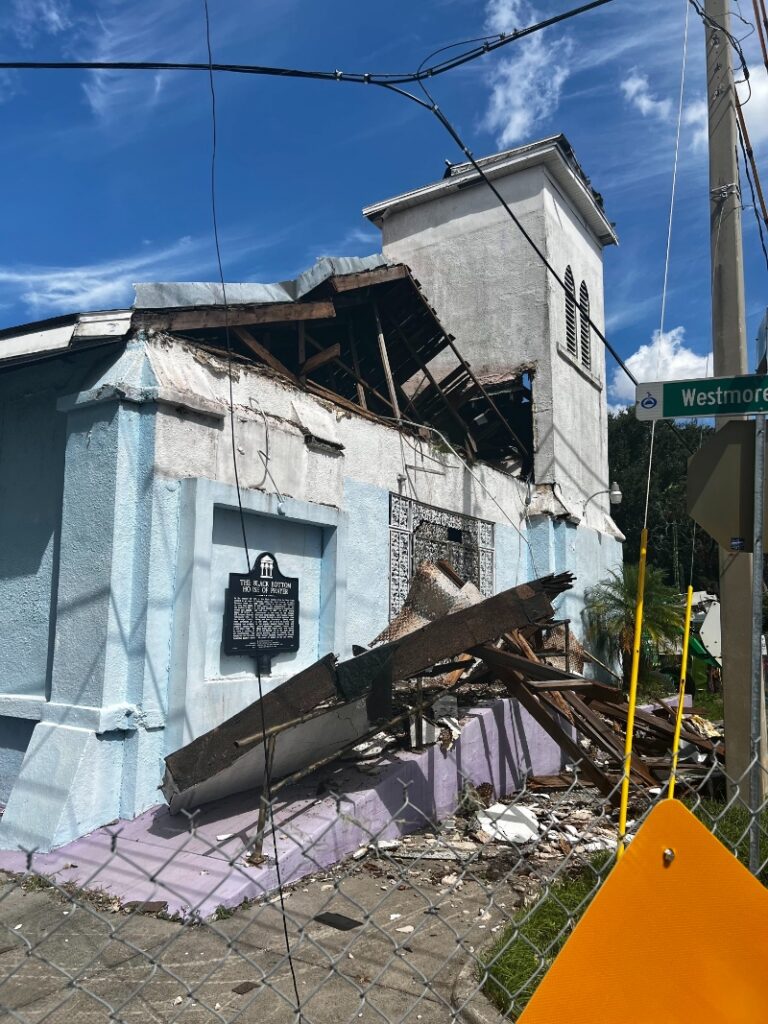
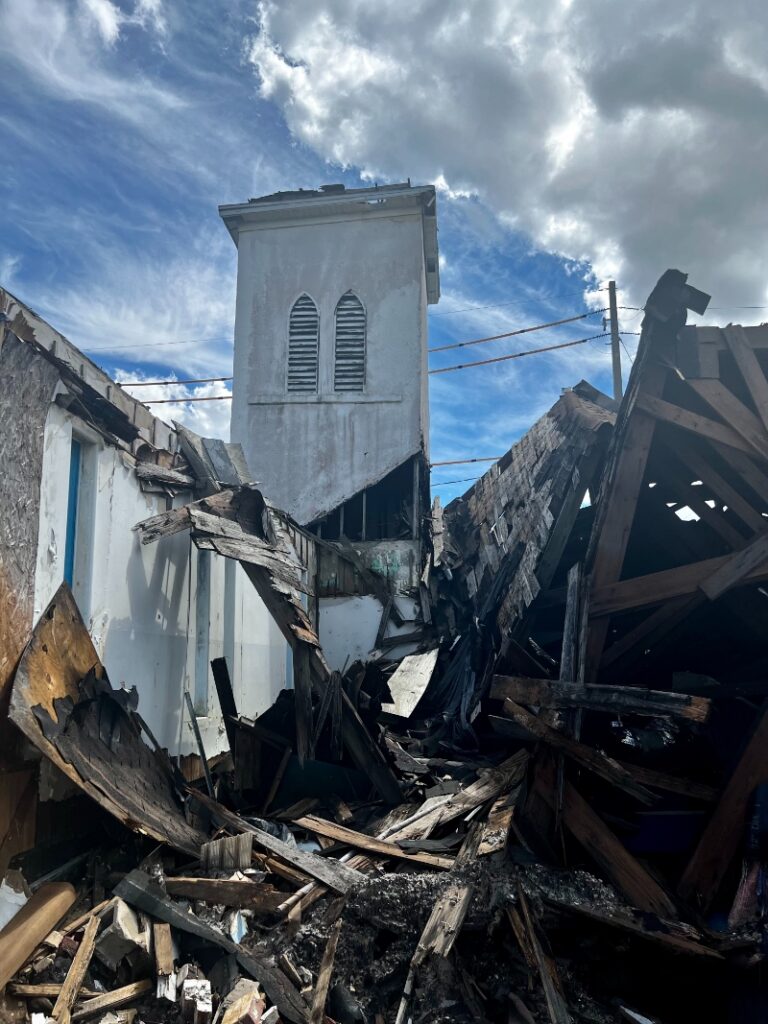
Instead, Pastor Jackson attained a $500,000 grant from Florida African American Cultural and Historical Grants, with the caveat that she secure a responsible general contractor who work within the parameters of historic preservation. That led her to Interstruct. The design + build construction company was located just blocks away, having joined the Parramore neighborhood in 2020 when they purchased land and a pair of buildings to be developed into its headquarters.
A Neigborhood Connection
Jackson didn’t know Ryan Young personally, but she’d heard of him. “I read an article in the newspaper about him, I noticed that he’s involved in the community, he’s seriously going to meetings, he’s networking and meeting people.” At their first appointment, she told him about the church’s history, extensive damage and her dream to turn it back into a community hub. “He said, ‘OK, you have $500k on the table — let’s put it to work,” she recounts.
“That alignment of mission and bricks-and-mortar made the decision easy,” Young says. He offered Interstruct’s services pro bono, as a commitment to the community and the success of the project.
After a year of advance work, which included stabilizing the structure and demolishing the collapse, producing architectural drawings that kept the historical accuracy intact and navigating the permitting process, the actual construction work began in early 2023.
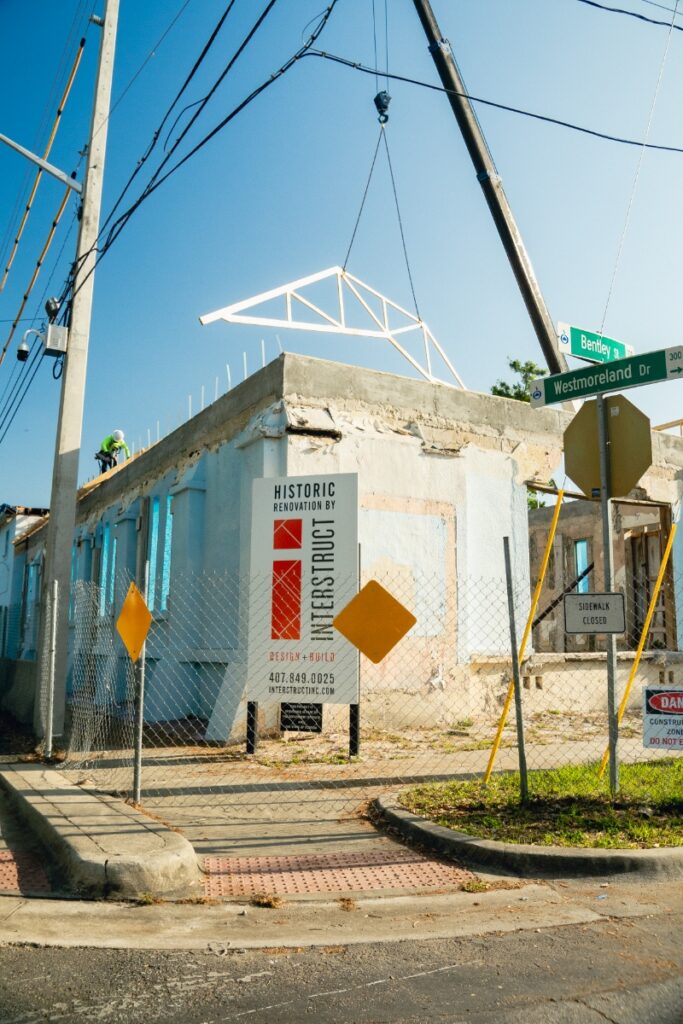
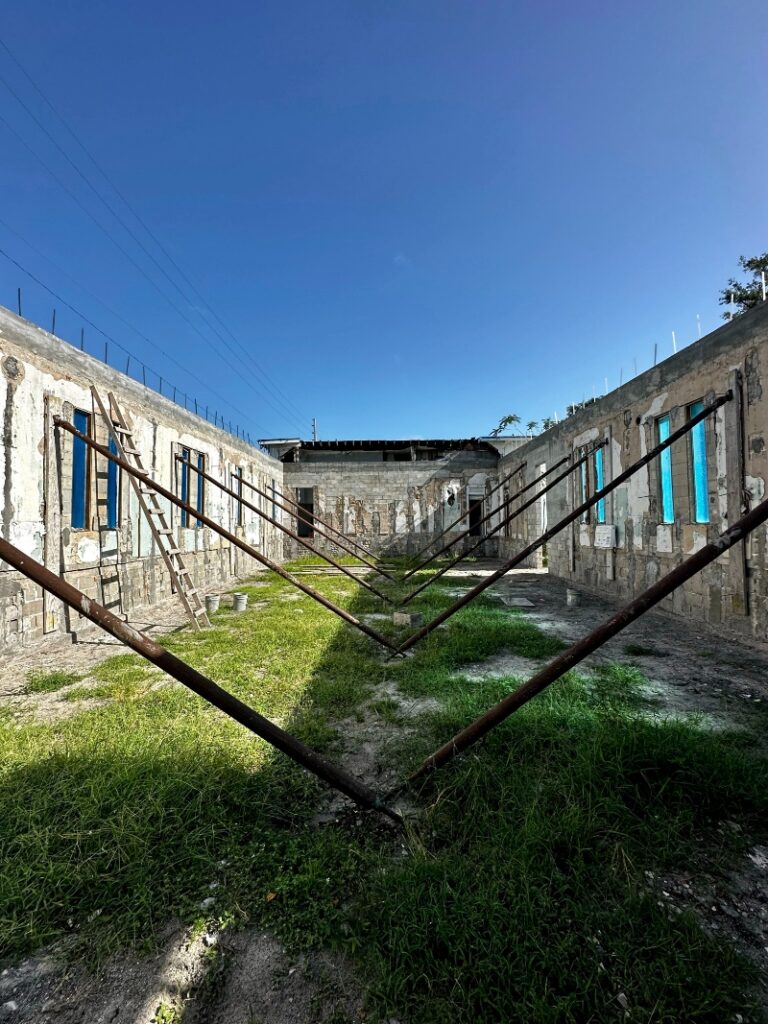
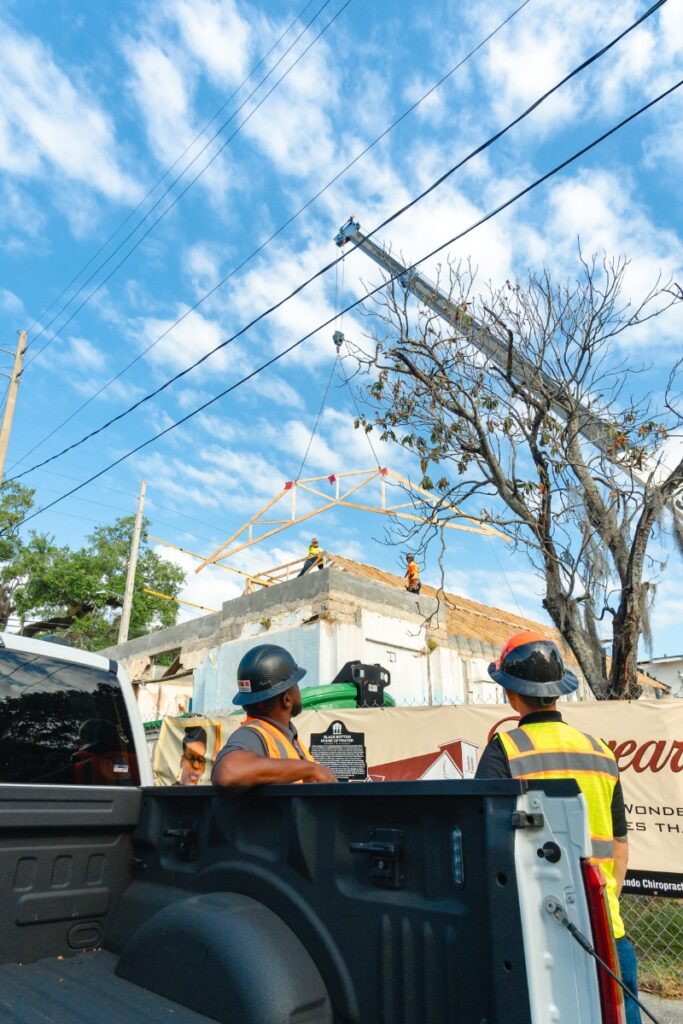
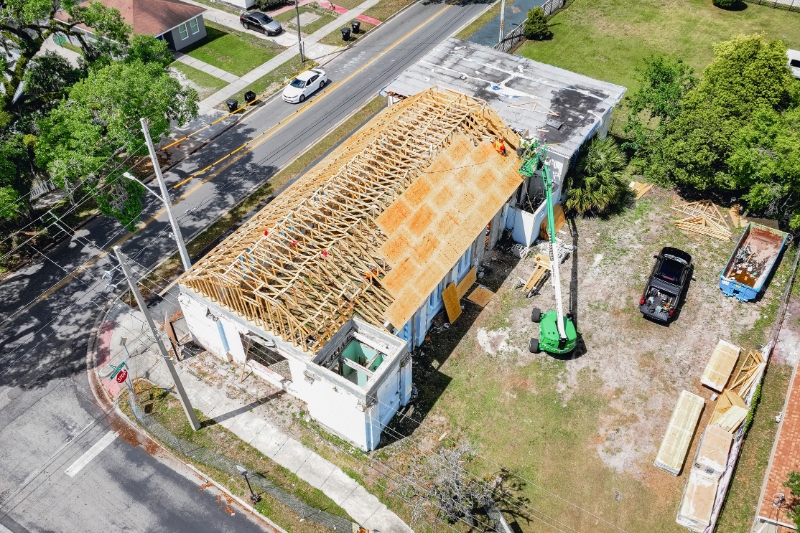
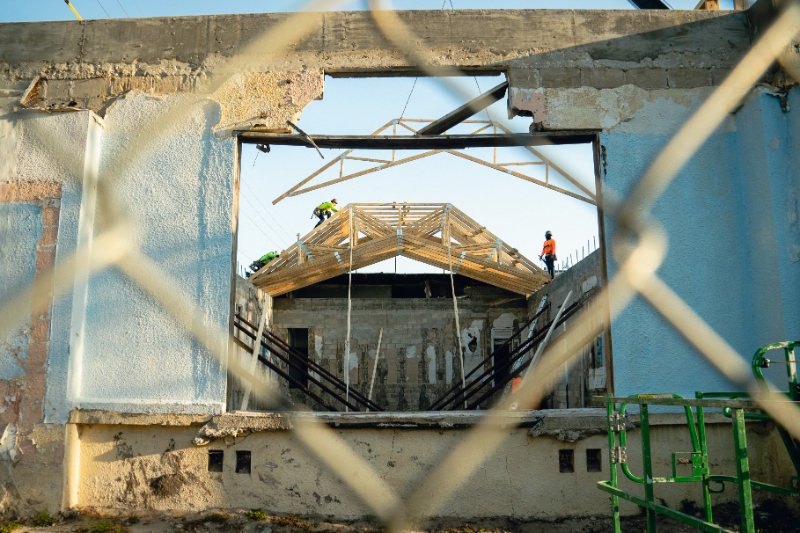
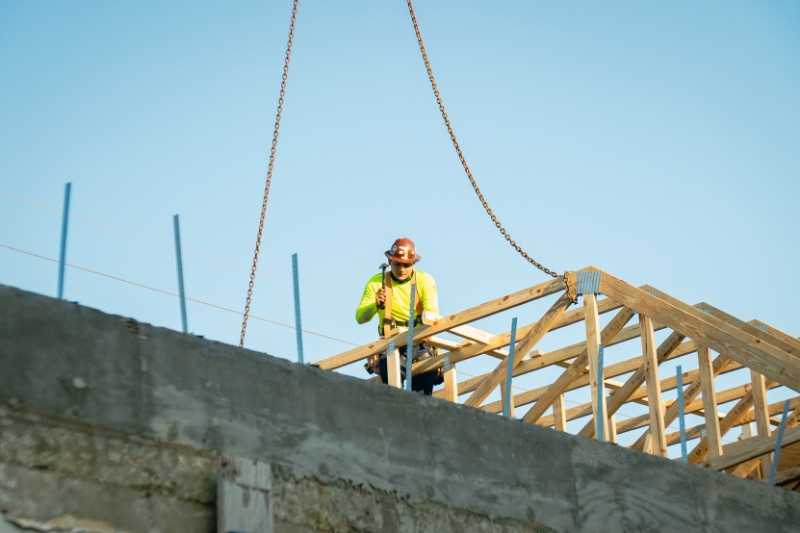
Interstruct’s Joe Horsch served as superintendent after Interstruct completed the stabilization and debris removal. “When I came into the project, it was essentially a bare shell,” he says. “There was no roof on it, there was nothing on the interior — it was simply just exterior walls and nothing else.”
The exterior restoration took more than a year to complete. “Structurally, the building was missing half its roof and had no lateral stability,” says Young. “We installed a formed tie-beam, new concrete and rebar that shores up the 100-year-old masonry, then installed a new roof that replicates the original pitch while meeting current hurricane codes.” The roof and bell tower were finally completed in spring 2024, ahead of Black Bottom House of Prayer’s 100th birthday in 2025.
Next Steps
With the exterior finally complete and the building structurally sound for another century, Jackson is able to begin fundraising for phase two of the restoration, which will address the interior. Meanwhile, the exterior restoration was a 2024 Golden Brick Award finalist for Resiliency and Sustainability by the Downtown Orlando Partnership, and was featured in Orange County Regional History Center’s Reflections magazine.
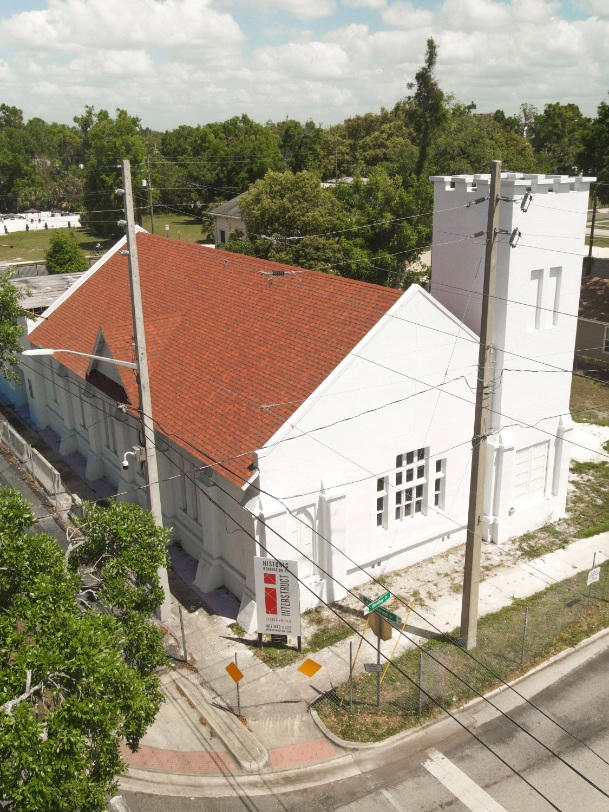
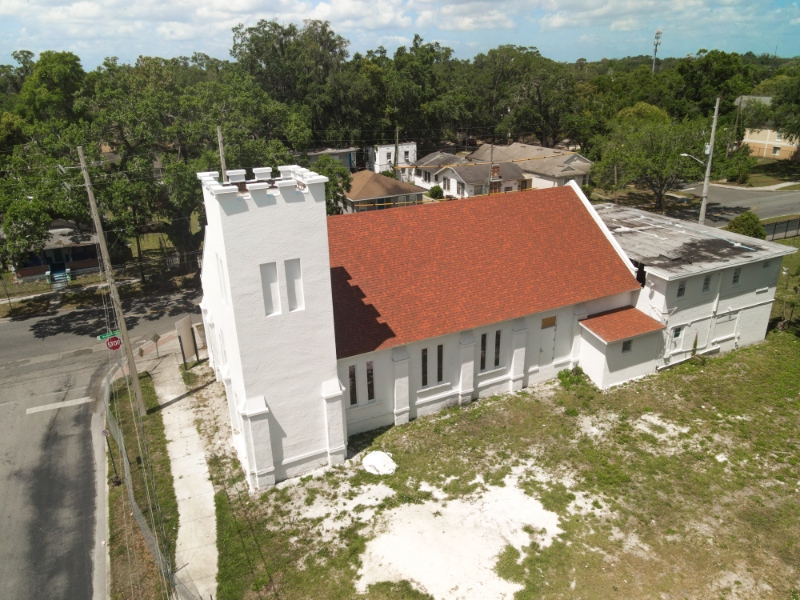
But for Young, the pro bono construction project is about much more than awards or press. “Revitalization of Black Bottom isn’t about a piece of real estate, it’s about community,” says Young. “Pastor Jackson called me and asked for help. I said yes — yes to a difficult process that took over two years, a complex state grant, the design and permitting process, and the stabilization of a crumbling 100-year-old structure. The message is simple: Sometimes a yes to someone in need results in a new relationship, a restored hope, a better community.”
You can read the full story of the history and restoration of Black Bottom House of Prayer at the Orange County Regional History Center’s website.
The message is simple: Sometimes a yes to someone in need results in a new relationship, a restored hope, a better community.
– Ryan Young, AIA
