

12.11.2025
Adaptive Reuse in Practice
Interstruct specializes in adaptive reuse, a foundational principle that reclaims existing building stock to meet the needs of new tenants and revitalize neighborhoods while respecting their history and cultural DNA.
The practice requires vision, persistence, creativity and a deep respect for place. It’s how we reduce waste, preserve history, and build smarter. It guides our in-house development projects and expansion into new markets where we can respond to available building stock. Preserving and reimagining the architectural and cultural worth of older buildings strengthens neighborhood identity and pride. It keeps people connected to place, reduces waste and maintains familiarity and stewardship. It is a gateway for mixed-use development, creating walkable, connected communities where housing, work, and services share space.
Expanding the practice of adaptive reuse across the industry requires buy-in from architects and contractors, and regulatory support from local government. It means updating codes that favor new construction over reuse, finding better funding models, and rethinking old assumptions about traditional financing, which is geared towards new construction over adaptive reuse. We are constantly advocating for changes and supporting the narrative for new possibilities.
Interstruct’s expertise in adaptive use has reclaimed historic buildings and transformed vacant shopping malls, creating new mixed-use developments for healthcare, hospitality and education — all while preserving infrastructure, building materials, and a connection to the past.
Here is a look at some recent design + build, adaptive reuse projects by Interstruct.
Industrial Modern Office
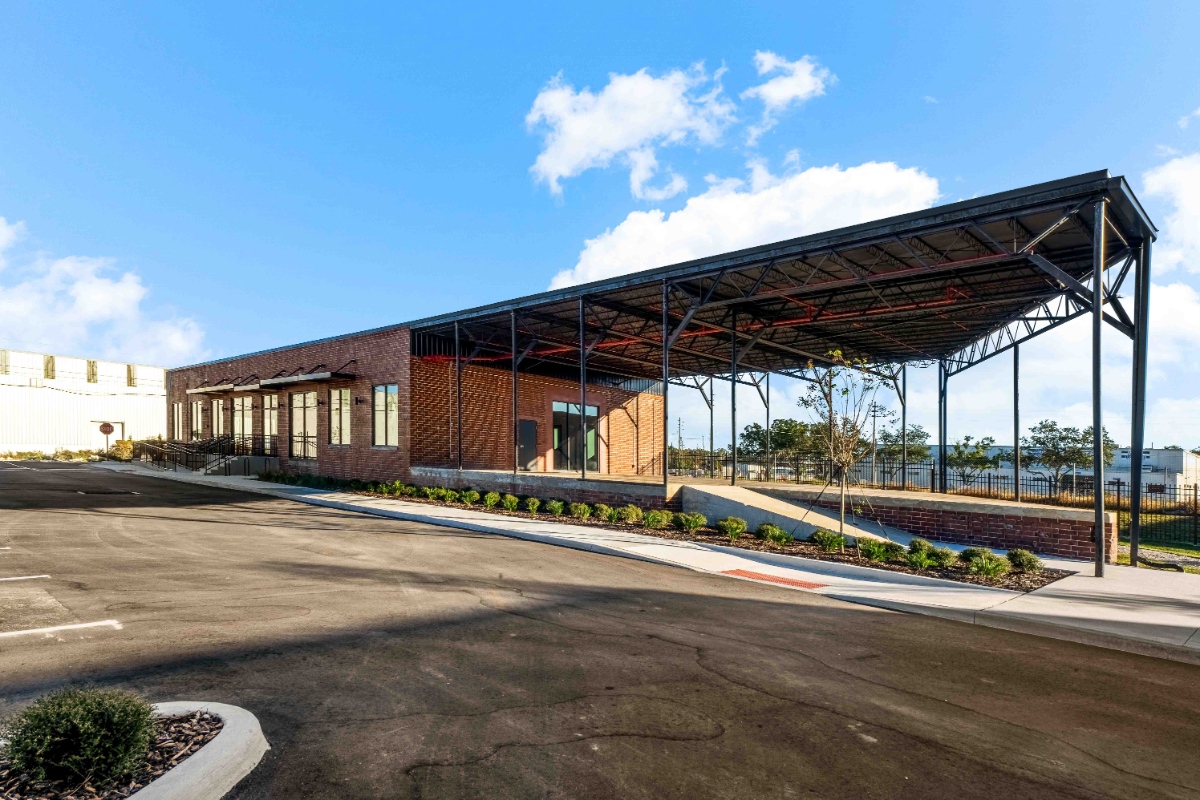
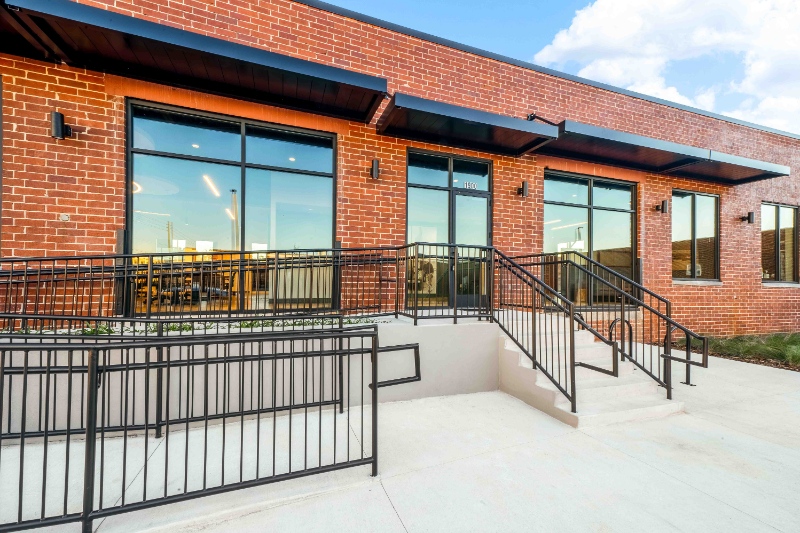
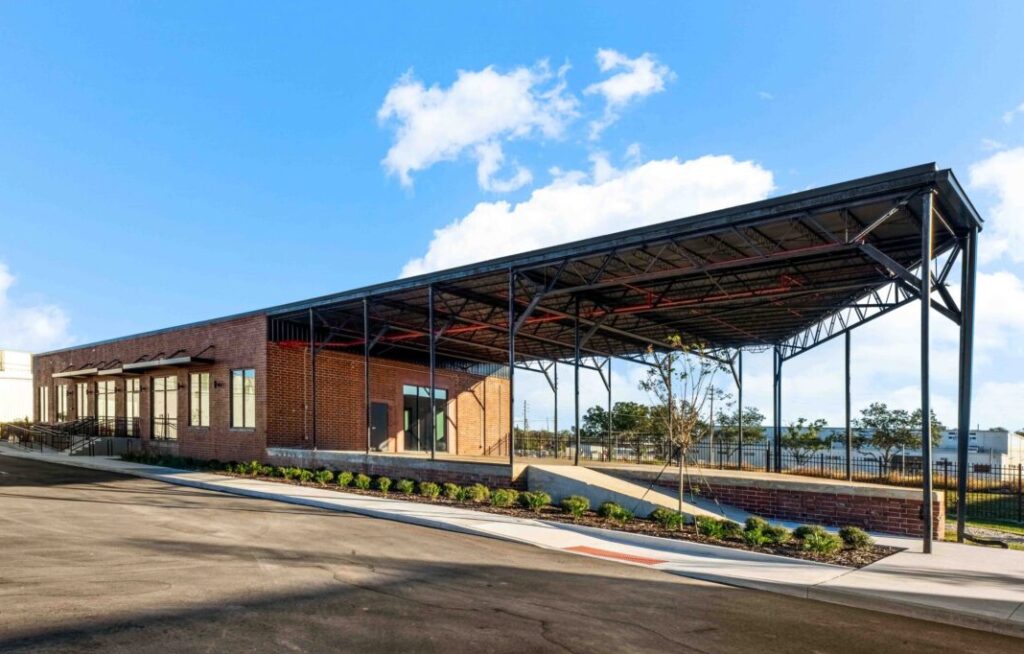
A 1930s warehouse reimagined as modern offices for a financial-services firm



Photos by T. Ramzy Hicks
Dr. Phillips, Inc. turned to Interstruct for design and build services of this 5,000 SF brick building. Interstruct Design, our in-house architecture firm, envisioned an industrial modern office complex that blended original elements like exposed brick walls, exposed ductwork and weathered concrete floors with Class A office finishes, with a feel that is modern and timeless.
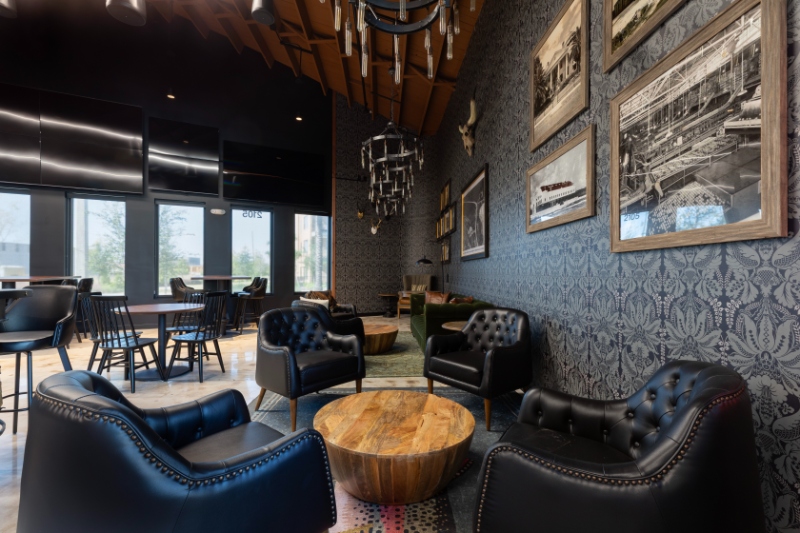
Walter’s Tavern at Great Southern Box Company
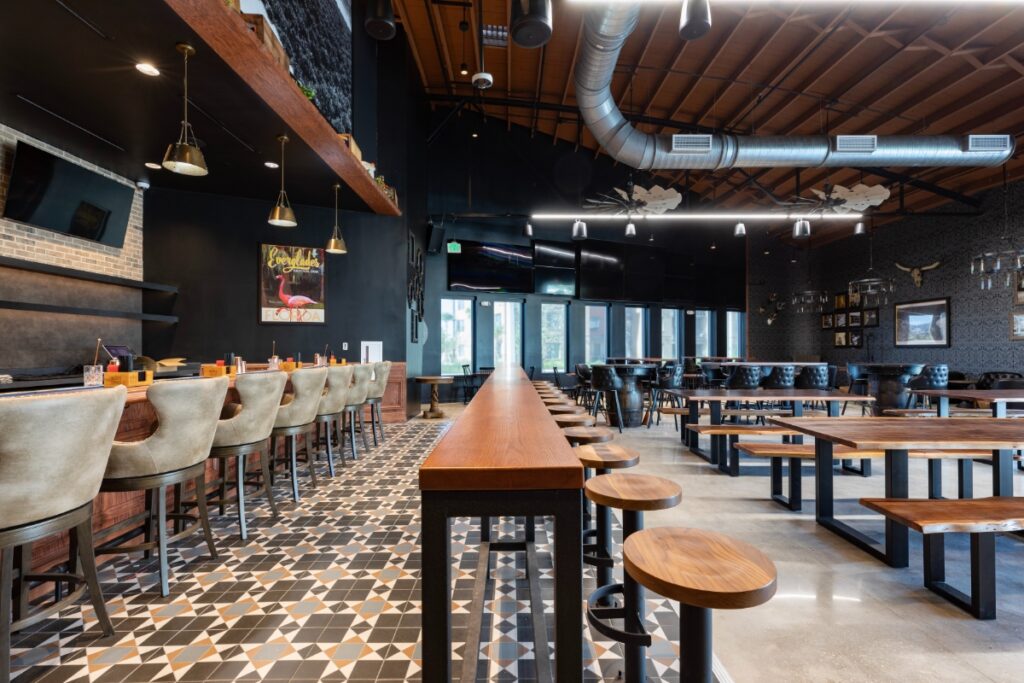
3,800 SF restaurant and bar anchoring a new food hall born from a former warehouse


Photos by Harry Lim Photography
This is a complete design + build by Interstruct for Walter’s Tavern, a 3,812 SF upscale sports bar that is a centerpiece of Great Southern Box Company, a high-profile dining destination in Orlando’s thriving Packing District. The resulting restaurant for Pine Street Hospitality taps into our extensive hospitality experience, creating gathering areas featuring rich textures, colors and custom furnishings that reflect and honor the former citrus-packing warehouse’s key role in the epicenter of the 1930s citrus industry.
Suncoast Crossing
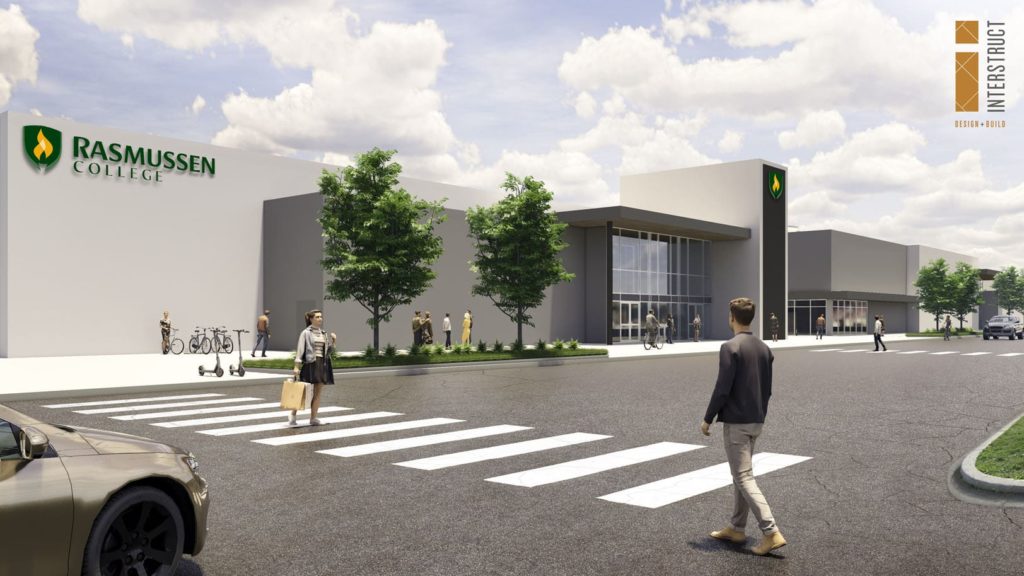
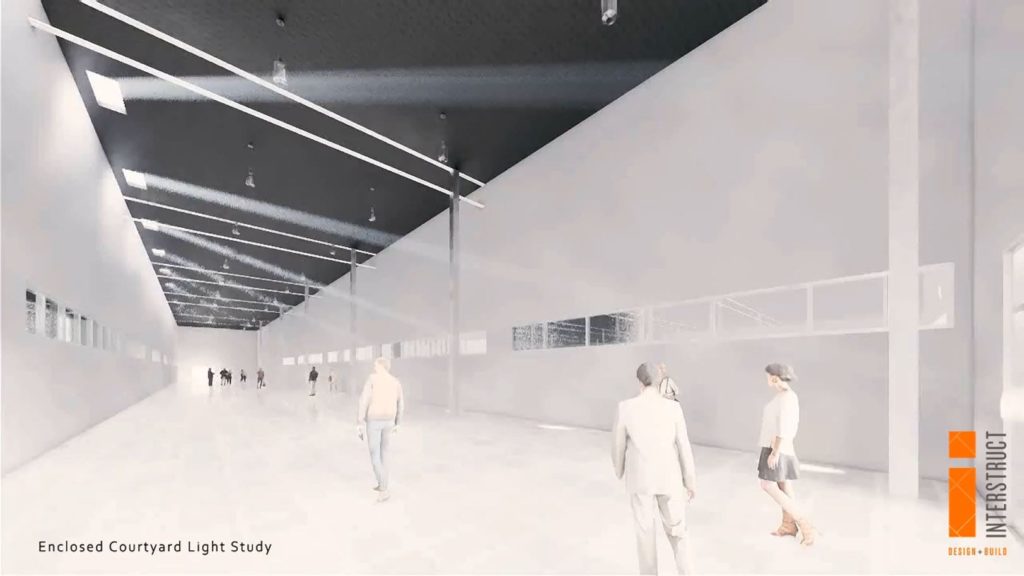
A former Super Target converted to higher education campus and shell space for other tenants


Renderings by Interstruct Design
Photos by Chad Baumer Photography
Interstruct served as architect and contractor for a 150,000 SF shell project designed to suit the needs of a variety of new tenants, including Rasmussen University‘s Central Pasco campus. For the university’s Central Pasco campus, we created high-tech classrooms for the school’s specialized health sciences program, including specialized lab rooms. We also excavated a section of the building’s existing façade to create a light-filled courtyard that serves as a welcoming commons and gathering space for students and faculty.
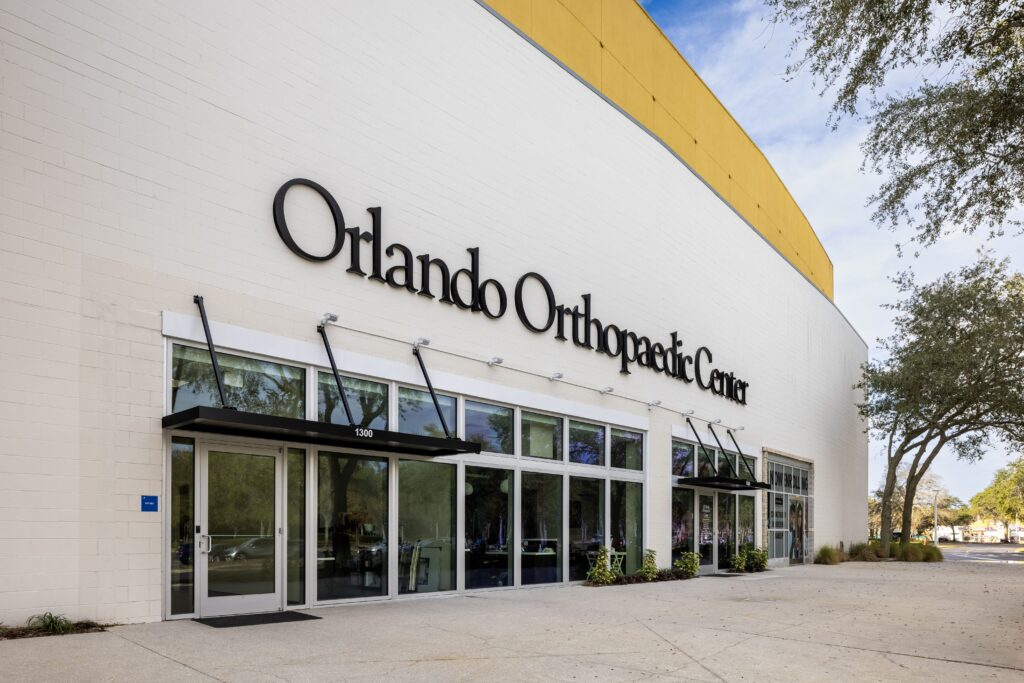
Orlando Orthopaedic Center
Vacant shopping mall space transformed into a state-of-the-art medical office


Photos by Chad Baumer Photography
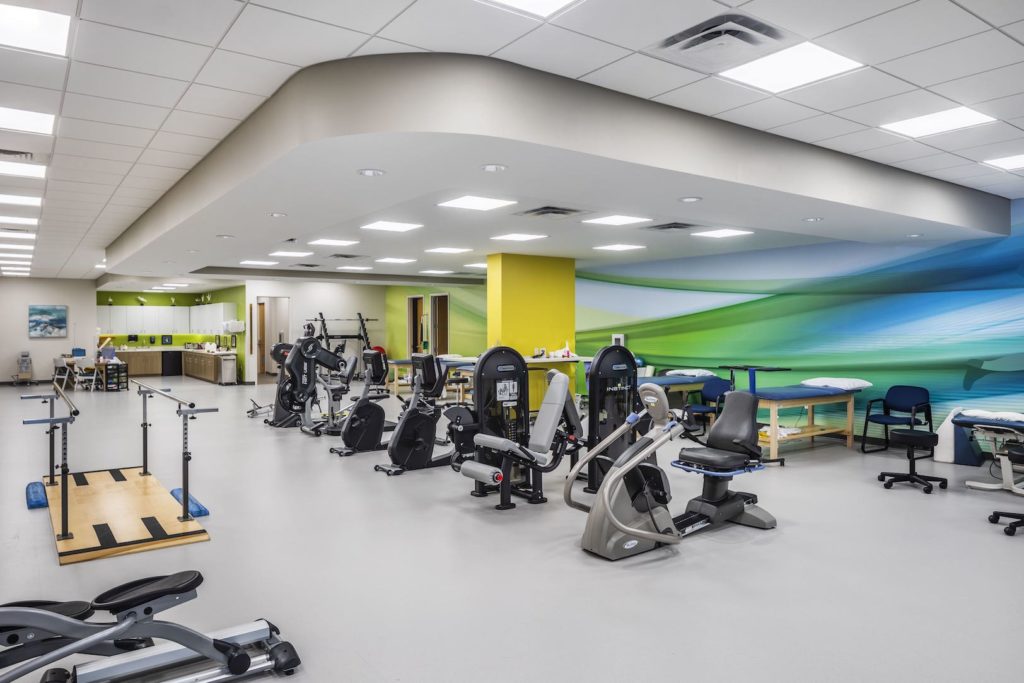
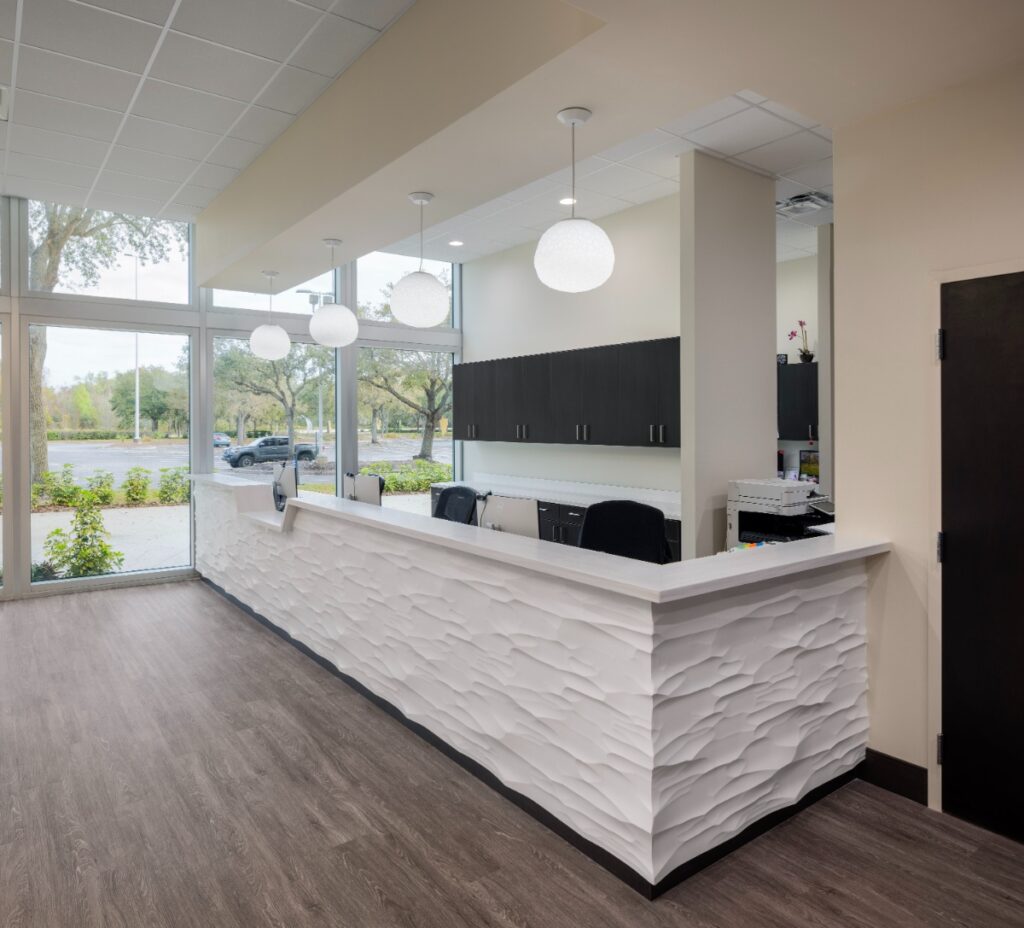
Interstruct provided design + build construction on a new healthcare facility for longtime client Orlando Orthopaedic Center. The 17,000 SF customized medical office building includes examination rooms, physicians offices, a rehab facility, and a state-of-the-art imaging suite with two X-rays and an MRI machine. We also added an external storefront adjacent to dedicated patient parking, and created internal access to the rest of the shopping mall, a crucial step in adapting the former retail space into vital, mixed-use developments.
FORDify the Arts Courtyard
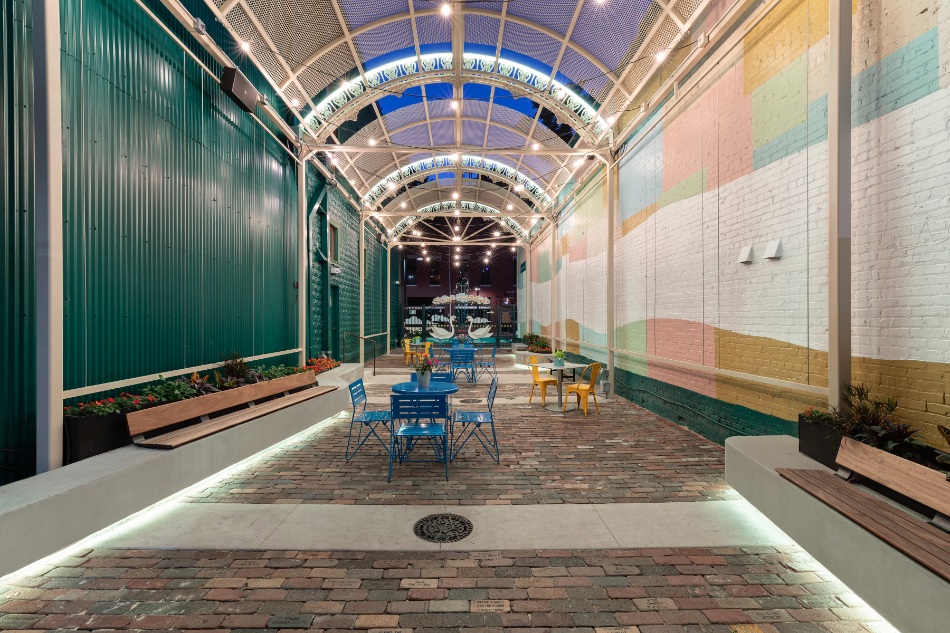
An unused asphalt alley transformed into an urban creative community gathering space


Photos by Harry Lim Photography
Interstruct provided no-fee architecture and construction management for this nonprofit effort led by Dr. Paul Skomsky as a tribute to his late friend Ford Kiene—an Orlando preservationist who restored the adjacent 1886 Rogers Kiene building and donated it to the City of Orlando. Interstruct’s in-house design + build team brought it to life using salvaged elements from the former Church Street Ballroom. An unused alley that runs along the historic Rogers Keine Building is now a frequently used downtown venue, featuring repurposed elements from the demolished Church Street Ballroom, including the steel arches and bricks, now inscribed with donors’ names. The project earned a Golden Brick Award for Public Works and Placemaking from the Downtown Orlando Partnership.
Interstruct HQs and the Architect-as-Developer Model
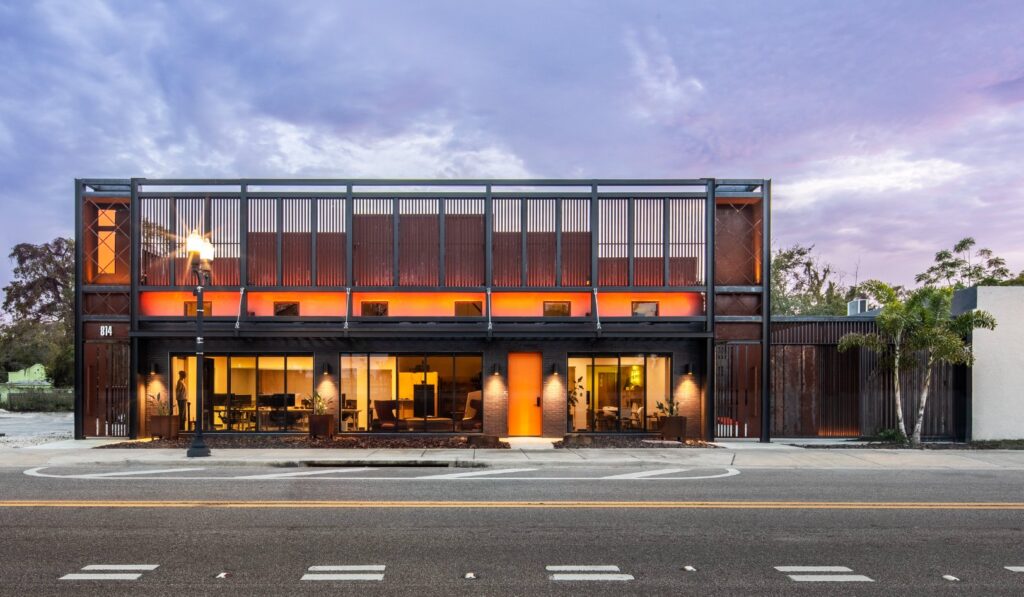
Interstruct employed adaptive reuse design + build for our company headquarters in Orlando and Tampa. Our Orlando HQ at 814 West Church Street in a 1940s structure in Parramore is a building block for a multistep, multiyear plan to reinvigorate the historically Black neighborhood. The office serves as a physical commitment to adaptive reuse as a key piece of the revitalized West Church Corridor, linking downtown Orlando with Camping World Stadium.

Photos by Chad Baumer Photography
In Tampa, a formerly nondescript 1960s office building at 1802 West Kennedy Blvd. is an architectural centerpiece of the South Tampa neighborhood. Both projects exemplify Interstruct’s Architect as Developer model, signifying adaptive reuse as a critical catalyst for the reclamation and revitalization of overlooked communities.
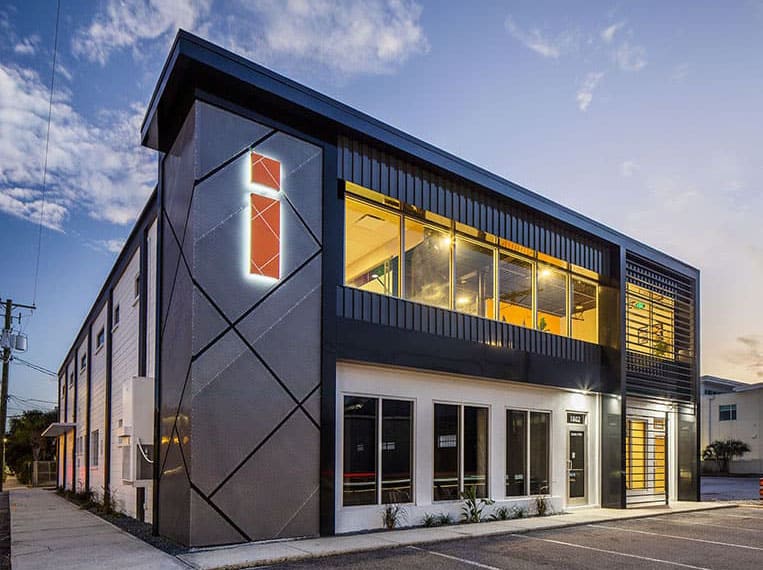
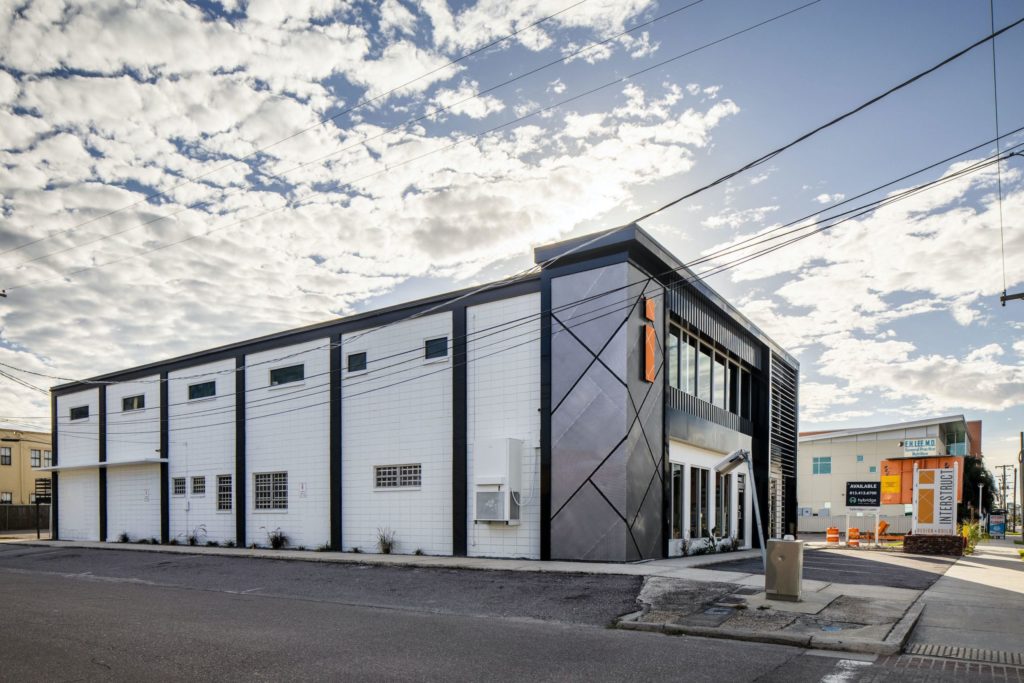
Photos by Chad Baumer Photography
Learn more about Interstruct’s position as a thought leader promoting adaptive reuse across the construction and design industry.
