

2.28.2026
Inside Interstruct’s Architecture Team: Leadership, Path, and Perspective
Susan Moynihan
As Interstruct celebrates its 25th year, new leadership roles and expanded interior design capabilities signal an expanded, studio-led approach to architecture across our offices.
Ten years into building Interstruct’s architecture team — aka the A-Team — Ryan Young, AIA, has made several strategic moves to support continued growth by naming two Associate Principals to lead teams in both the Orlando and Tampa offices.
Nathan Wallace was promoted in Orlando while Carlo Hernandez has moved west to build a team in Tampa. Architectural associate Metzli Barr, RID, has completed her certification from the Council for Interior Design Qualification and received her state license, formally repositioning her to lead our growing interior design services.
Throughout 2026, Interstruct celebrates 25 years as an architect-led general contractor. These promotions provide an opportunity to learn more about key players on our A-Team: their paths to architecture, insights about Interstruct’s approach to design, and what to look forward to in the next chapter of Interstruct Design + Build.
Learn more about our Architecture Practice.
UNEXPECTED BEGINNINGS


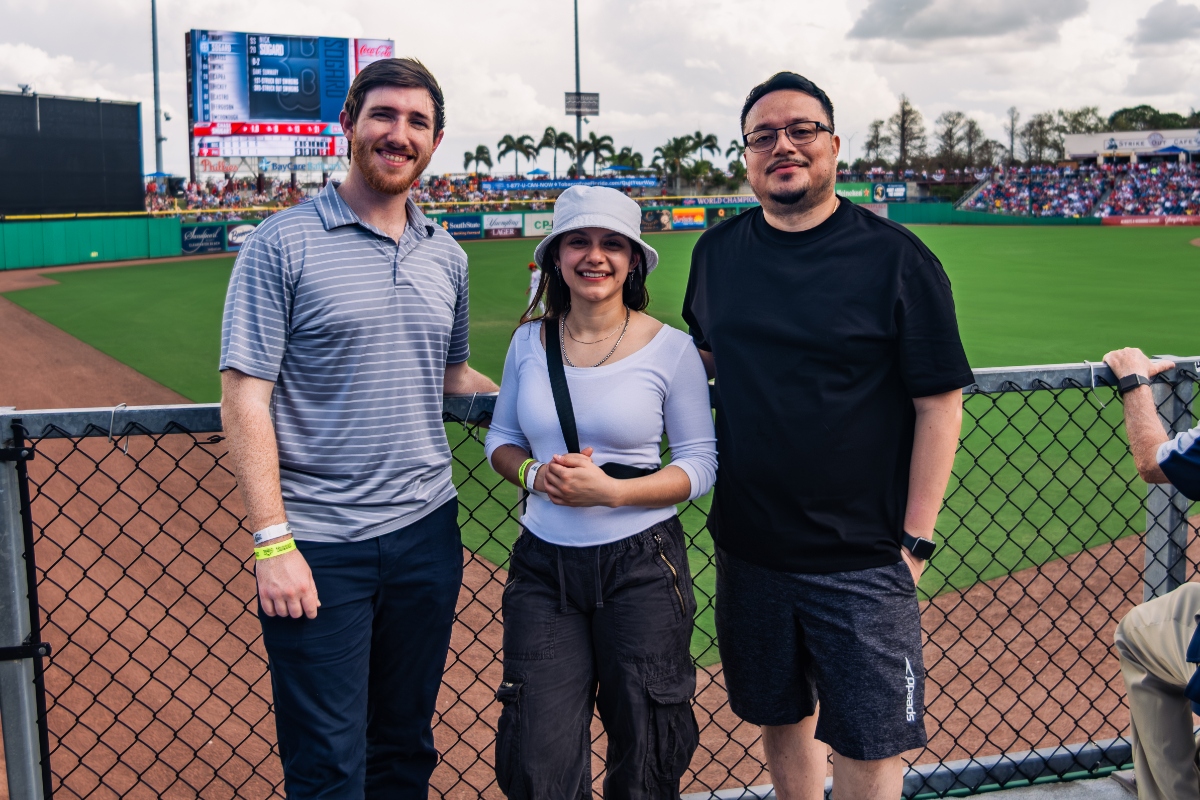
From left: Carlo Hernandez, Metzli Barr, Nathan Wallace
The team came from different paths, with one thing in common: None of them set out at an early age to become architects.
Carlo discovered architecture through a college drafting class. His brother was studying drafting, so he gave it a try and found he enjoyed it. The school required that students pick a major early on, and architecture involved drafting. “So I just checked the box,” he says. “I started going with it, and I fell in love with it as I learned more about it.”
Nate was an avid musician in high school, playing drums in his school drum line and for his local church. “I like the creative aspects related to drums and rhythm,” he says, “but I didn’t necessarily think that I should go into music as a career.”
As for architecture, “I didn’t really understand what it was,” he admits. “In school, the only time architecture is mentioned is Greek or Roman history.”
But when someone recommended an architecture class in college, he enrolled. “With just that first semester, I thought, if this can be a job, sign me up! I loved the conceptual side of space. and understanding how people operate and work and connect with buildings,” he says.
Metzli was always interested in the arts but also enjoyed math. So for her, studying architecture was intriguing. Problem was, she had just missed the deadline for the architecture program at UF. An advisor recommended that she apply to the school’s interior design program instead; it had availability, and she could switch to architecture down the line. She soon found that interiors intrigued her as much as architecture did.
“With architecture, you think about building the shell — defining the space as a whole,” she says. “Interiors is when you can go inside of that shell and modify the spaces by how you think it might affect people. That’s really cool — getting into the details of what’s happening on the inside, and how that directly affects people.”
She’s committed to keeping that holistic design approach as she continues her architecture education, expanding potentials from interior design to landscaping and urban planning.
THE INTERSTRUCT DIFFERENCE
Nate joined Interstruct fresh out of undergrad, and was immediately encouraged to experiment and grow. “Even from the beginning, I was able to do really cool conceptual renderings,” he says. One of his first projects for Interstruct co-founder Ryan Young, AIA, was a bike rack designed like a plant. “Then from there, I just tried to do interesting projects.”


That’s what he cites as Interstruct’s ‘secret sauce.’ “It’s more than just the people, who are awesome,” he says. “It’s the projects, and the opportunity to channel what I would like to do or what I’d like to see out of projects. We give our team a lot of flexibility and opportunities to grow and do new things.”
Carlo cites company founders Ryan Young, AIA, and Rich Monroe for creating an atmosphere that keeps the team invested. “It’s our leadership, Rich and Ryan,” he says. “They’ve been so pivotal in my career. I think we share same ideals and I never feel stagnant in this role or with this company. Ryan is such a visionary; he’s always like, ‘Oh, what can we do next and what can we do here and how can we do that?’”
The newest of the trio, Metzli has spent her years at Interstruct balancing work and studying for her interior design certification. The four-year program gave her a deep understanding of the demands of architecture from the ground up, and how interior design can work within and enhance the architectural structure of a building or interior changes.
“It’s more than just the people, who are awesome. It’s the projects, and the opportunity to channel what I would like to do or what I’d like to see out of projects. We give our team a lot of flexibility and opportunities to grow and do new things.” — Nathan Wallace
“Working here gave me a really big leg up,” she says. “Because I was so involved with so many different portions of the projects, it helped give me a solid background and knowledge on some of the textbook things that I was learning.”
Nate says her studies have influenced the whole team. “It’s been cool to see the other side of interior design. I was brought up in school to think about exterior architecture, how buildings interact with people from a top-down approach. With interior design, it’s very in-to-out. Thinking about the parts and pieces, fabrics, colors and how that inhabits into architecture has been interesting. It gives me a different perspective, looking in at details like furniture and how you interact with small spaces and lighting that’s really intimate.”


Neurovations Clinic in Winter Park leaned heavily on Metzli’s interior design experience; photos by Chad Baumer Photography
BUILDING A UNIQUE AESTHETIC
Interstruct Design + Build describes its aesthetic as Florida industrial modern. To Nate, the first requirement of architecture is functionality, making sure the design holds together and does everything it needs to do to serve the client and industry.
The team likes to be transparent about how the architecture works, which is the industrial component. To that end, they often leave the structural elements exposed, such as ceiling beams and piping, or install metal canopies or open staircases that show how the element functions. Many architectural styles create a framework and then dress it up to cover up the structure. Interstruct does the opposite, letting the architectural design shine.


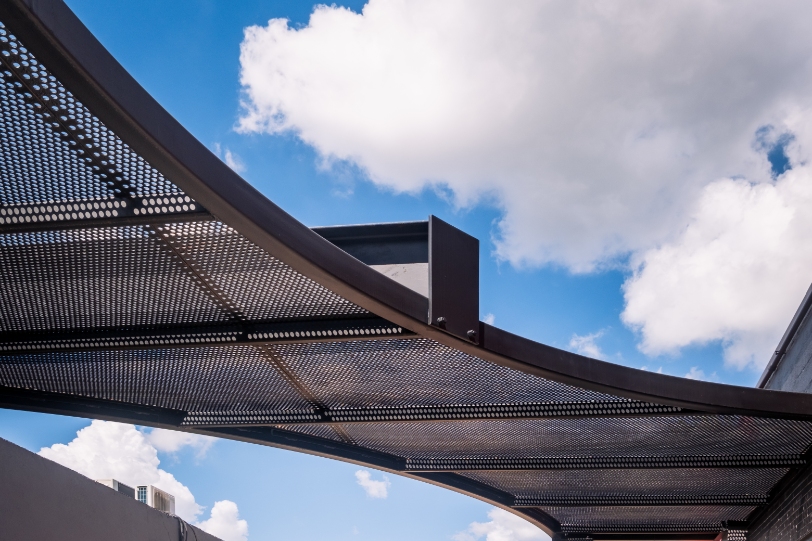
Interstruct HQ photos by Ricardo Hernandez
“We’re not wrapping everything with pretty pieces of aluminum or trying create a look that’s like cake icing over the interior,” he says. “Our architecture can look exoskeletal, if you will.” Another part of functionality is meshing with the existing environment. “Florida has its own architectural vernacular,” he adds. “We have our own climate, and need to cater to hurricanes and heat. Put those elements together and that’s kind of our thing.”
The team really bonded over designing Interstruct’s HQ at its Parramore redevelopment in downtown Orlando. In January 2020, Ryan and Rich closed on the parcel that included a 1940s and a 1980s warehouse. Rather than scrape the existing structures, they chose adaptive reuse to reimagine and rebuild the structures, preserving the character, materials and scale while reorienting the buildings to open to the street, adding architecture features including an industrial art-deco style steel façade that also provides transparency to the original silhouette, and reclaiming forgotten space between the buildings as a connective courtyard and team gathering place.
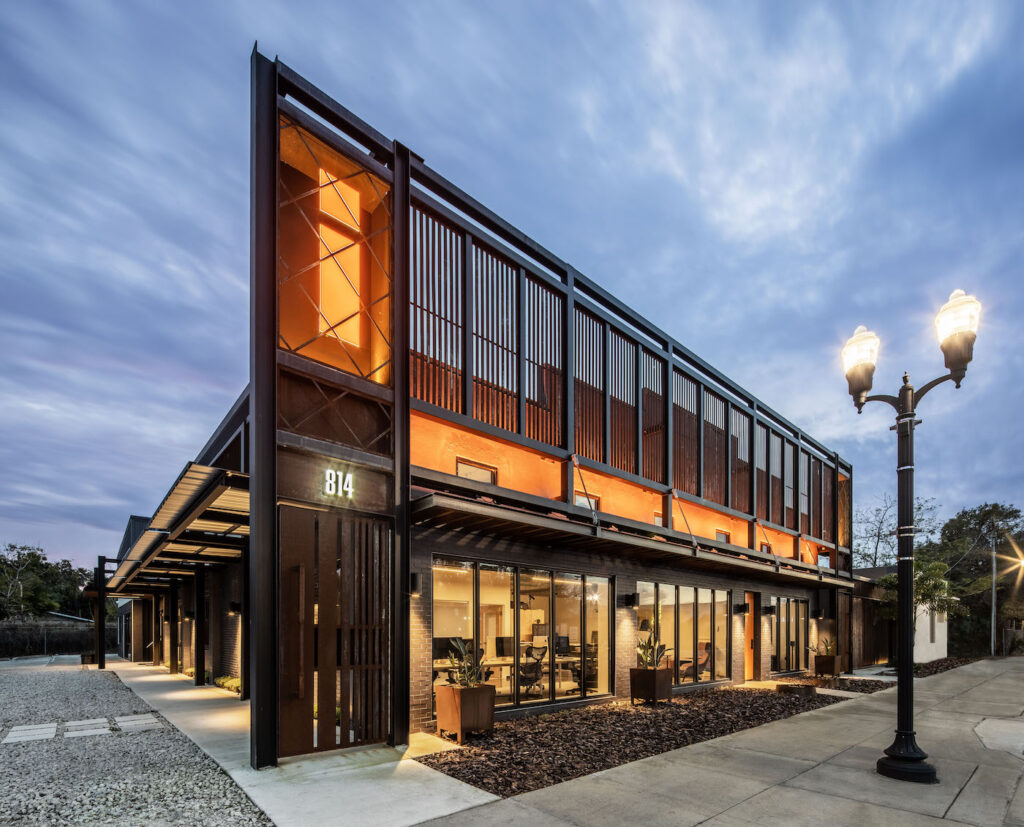

Interstruct HQ at 814 W. Church Street, Orlando. Photos by Chad Baumer Photography, Ricardo Hernandez
The headquarters is a showcase for the team’s architectural expression, and is influencing how clients approach them. “Before they would reach out to us because they’d seen our Francis Park Townhomes,” Carlo says, referring to their flagship Architect-as-Developer project in the Hourglass District. “Then they started reaching out because they’d seen our office.”
“We don’t have a niche that we want to market, because we don’t want to be tied down to one thing only. We’re always evolving.” — Carlo Hernandez
That said, the design team’s aesthetic is ever evolving. “I don’t think we ever want to be tied down to something, because we see value in every project,” Carlo says. “It might sound corny, but my number-one thing in working with Interstruct is integrity. We try to put value into whatever type of style you have, because we have a whole bunch of different clients.”
BRINGING DESIGN TO LIFE
Interstruct’s modernist style often serves as a starting point for conversations, says Metzli. “It’s what we do really well, but it’s just a platform to jump from.” From there, they help clients envision what interior design could be. “What does this business do? Who does it serve? What does your marketing look like? What does your branding look like? From there we find inspiration. If a brand uses a lot of green or blue, we find accent pieces that fit in with our vision and elevates their branding.”
Light is a big consideration in approaching a project. “Filtering the light, bringing more or less of it in,” Metzli explains. “You can design with that in mind, and how it will affect the overall mood, space and colors on the inside.” Natural elements show up frequently in their designs, be it indoor trees sculpted of foam and steel for Agave Azul’s flagship restaurant, or a soothing water feature or wavelike wall pattern for patient waiting room for AdventHealth. “You can incorporate natural elements for the well-being of people—I think that is super fascinating,” she says.


Sand Lake Commons is a 30,000 SF design + build project by Interstruct. Photos by T. Ramzy Media
For the next phase of Interstruct Design + Build, the aim is for each office to expand and grow under the leadership of Nate and Carlo, with even more input on the interior design side as well as potentially adding team members under Metzli.
“A lot of times, class-A office clients have their own finishes they want,” Nate says. “But now that we offer interior design as a service, it’s interesting to see how we can push not only what the interior feels like spatially, but what it feels like in terms of color, texture, and these other details that bring in the whole design. We get to help guide the owner in a way we haven’t been before, which is really cool.”
With architecture, you think about building the shell — defining the space as a whole. With interiors, you can go inside of that shell and modify the spaces by how you think it might affect people.” — Metzli Barr
Metzli is excited by the opportunities with restaurants and hospitality design. “Anything to do with that upscale atmosphere is really cool.” But she’s equally intrigued by office design, be it corporate offices or specialties like healthcare. “That’s where people spend a lot of time,” she explains. “So I think, how can we better improve this sector? It impassions me to improve quality of life for the every day.”

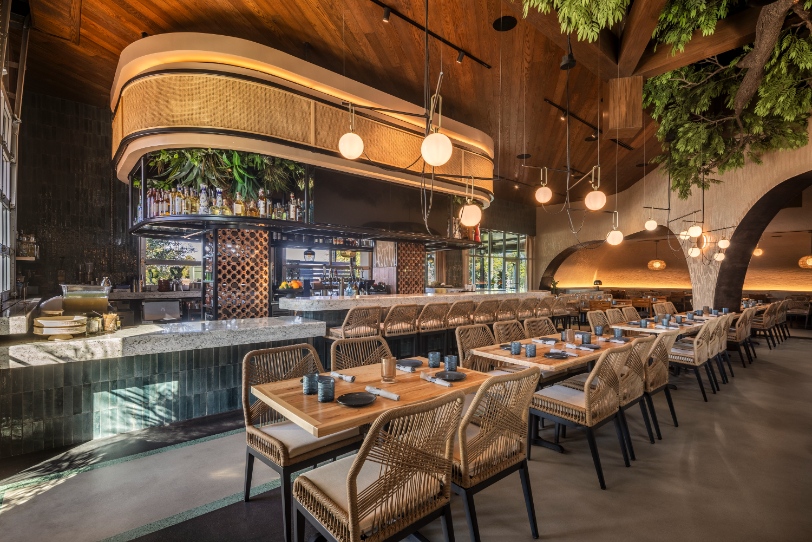

Agave Azul Cocina Mexicana was inspired by the owner’s photos of Mexico. Photos by Highlands Media
For Carlo, the breadth of project styles keeps everyone invested and engaged. “I don’t think we have a niche that we want to market, honestly, just because we don’t want to be tied down to one thing only,” he says. “I think we’re always evolving.”
WHAT’S AHEAD FOR INTERSTRUCT DESIGN + BUILD
With the recent promotions and certification, Interstruct will be able to expand the design + build services to serve clients throughout the Southeast. “I really like the trajectory that Ryan has us on, coming together to create more of a studio feel,” Nate says.
The A-team works closely with the construction team throughout the design + build process, from initial renderings through physical and technical specs and the final stages of interior design, creating a seamless experience for clients from inception through completion. Expanding the architectural teams in each office means they will be able to remain closely involved with construction projects, but also have more room for creativity as they head into the next chapter of Interstruct Design+ Build. “Our projects are focused and more interesting for owners,” says Nate. “And our design team can deliver really cool ideas that showcase what clients can get out of great design. It’s an ideal pairing.”
Want to Learn More About Adaptive Reuse?
Adaptive reuse is a cornerstone of Interstruct’s vision for thoughtful, sustainable, human-centric development. Here are three recent design-build projects that showcase the possibilities.
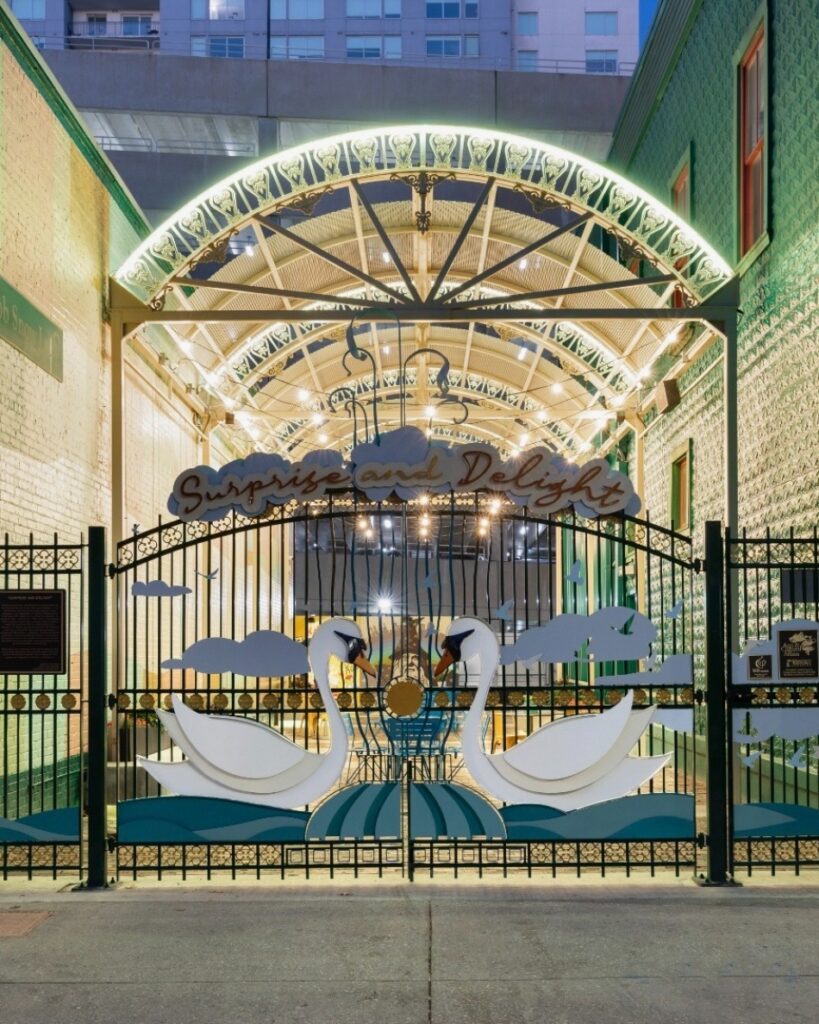

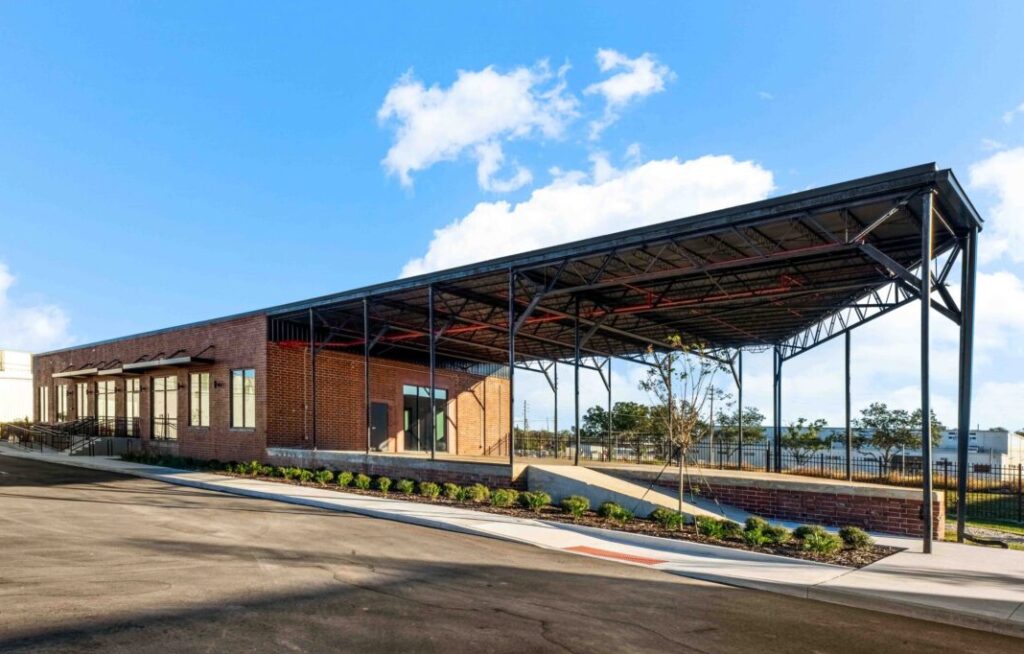
Photos by Harry Lim Photography (left, middle) and T. Ramzy Media (right)
FORDify the Arts Courtyard Interstruct provided no-fee architecture and construction management services for this nonprofit project, transforming a neglected alley into a pocket park and vibrant community art space in downtown Orlando. The project was recognized with a Golden Brick Award for Public Works & Placemaking by the Downtown Orlando Partnership.
Walter’s Tavern at Great Southern Box Company Interstruct completed design + build for an upscale sports bar and speakeasy anchoring the high-profile redevelopment of a former citrus packing warehouse into a destination dining food hall in Orlandos’ hip Packing District.
Packing District Adaptive Reuse Interstruct was contracted by Dr. Phillips,Inc. for a full design + build on a derelict 1950s brick building. The 5,000 SF modern industrial space is now leased to a financial services firm, and is just one of several adaptive reuse projects in the area for which Interstruct is engaged.
